

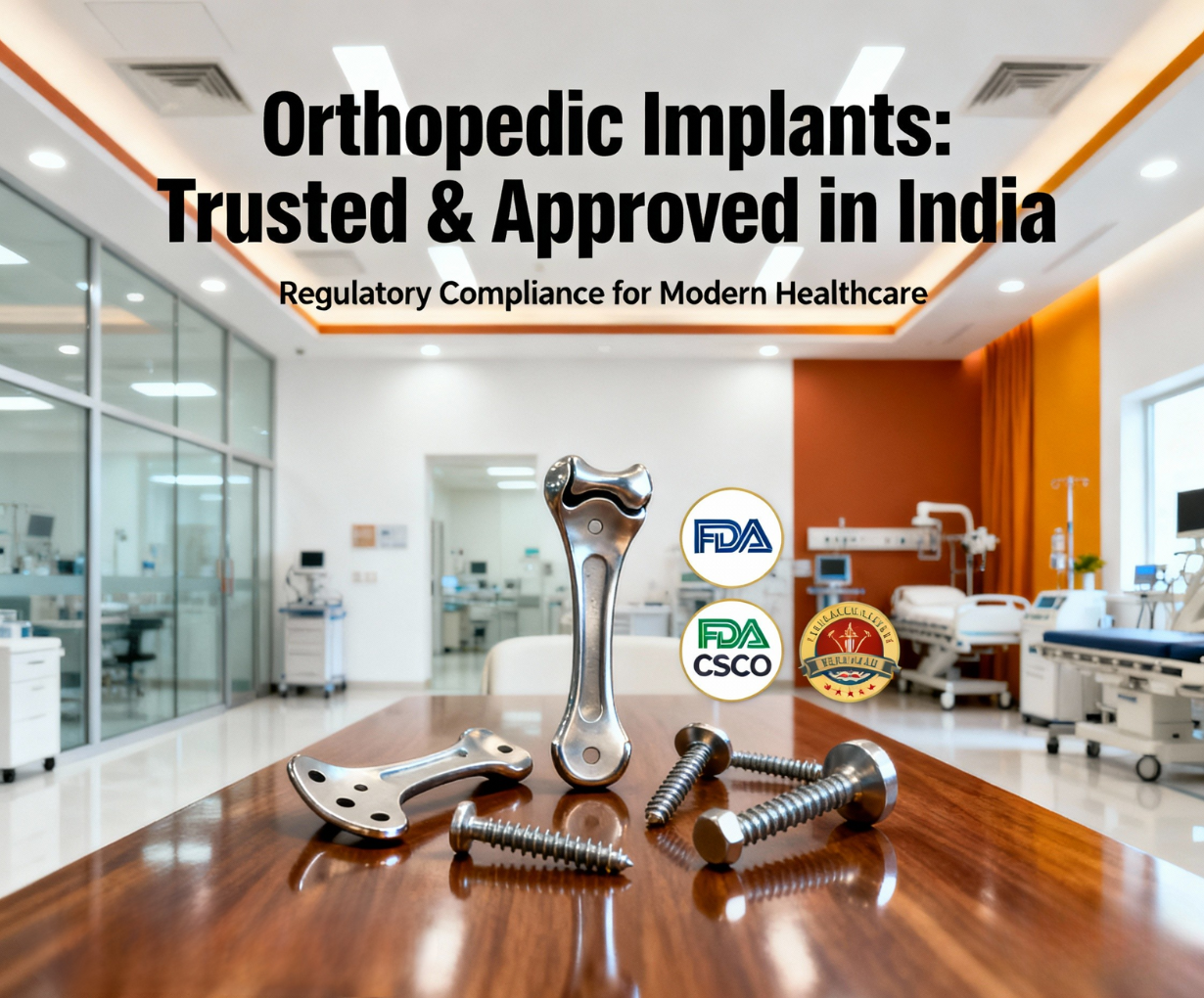
Understanding Orthopedic Implants and Their Regulatory Approval Process in India
India’s medical device industry has grown rapidly, making regulatory compliance crucial—especially for high-risk devices like orthopedic implants. If you’re a manufacturer or planning to enter the Indian market, here’s everything you need to know about orthopedic implants and their approval pathway under the Central Drugs Standard Control Organization (CDSCO) and Medical Device Rules (MDR), 2017.
What Are Orthopedic Implants?
Orthopedic implants are specialized medical devices used to replace, support, or stabilize damaged bones and joints. Commonly used in trauma cases, arthritis, or bone deformities, these implants restore mobility, reduce pain, and enhance patient quality of life.
Key Types of Orthopedic Implants
-
Joint Replacement Implants: Replace worn-out or damaged joints (e.g., hip, knee, shoulder)
-
Internal Fixation Devices: Stabilize broken bones with plates, screws, rods, wires
-
Spinal Implants: Support or correct spinal deformities using rods, plates, cages, hooks
-
Bone Grafts and Substitutes: Replace or stimulate bone growth with autografts, allografts, or synthetic materials
Made from biocompatible materials like titanium, stainless steel, or medical-grade plastics, these devices are engineered to perform safely inside the body.
How Are Orthopedic Implants Regulated in India?
Orthopedic implants are classified as high-risk, life-supporting devices. Their regulatory framework is governed by:
-
Central Drugs Standard Control Organization (CDSCO)
-
Medical Device Rules (MDR), 2017
Regulatory Approval Process for Orthopedic Implants
1. CDSCO Registration and Licensing
Manufacturers, importers, or distributors must obtain CDSCO approval before manufacturing, importing, or marketing orthopedic implants in India. This ensures that products meet strict safety, quality, and performance standards.
2. Clinical Evaluation
Applicants must provide clinical evidence of safety and efficacy—through clinical investigations, literature reviews, or post-market experience, depending on the risk classification and predicate device status.
3. Quality Management System (QMS)
Compliance with ISO 13485:2016 is required to maintain consistent product quality and safety throughout the manufacturing process.
4. Documentation and Dossier Submission
Detailed technical documentation must be submitted, including product description, intended use, risk analysis, design dossier, and testing data.
5. Post-Market Surveillance
Continuous monitoring of implants after market launch is mandatory for reporting and addressing adverse events, ensuring long-term patient safety.
Expert Support for Regulatory Compliance
Navigating India’s regulatory landscape for orthopedic implants can be complex and time-consuming. Partnering with specialized regulatory consultants like Regulatory Solutions India (RSI) helps streamline documentation, approval, licensing, renewal, and compliance processes for faster market access and reduced risk.
Conclusion
Orthopedic implants in India must meet stringent regulatory requirements to ensure safety, efficacy, and quality. By understanding the approval process—and leveraging expert support—manufacturers can achieve successful registration and deliver life-enhancing products to patients across the country.