
Navigating the Legal Landscape: Medical Device Licensing and Registration Process in India
India’s thriving medical device market offers vast opportunities for manufacturers and importers, but success hinges on understanding and complying with the country’s regulatory framework. The medical device licensing and registration process in India is governed by the Central Drugs Standard Control Organization (CDSCO) under the Medical Device Rules (MDR), 2017, ensuring patient safety, product quality, and legal compliance.
Why Licensing and Registration Matter
Obtaining the correct licenses and registrations is essential for:
-
Legal market entry
-
Avoiding penalties and product recalls
-
Building trust with healthcare providers and stakeholders
-
Ensuring safety and quality for patients
How Are Medical Devices Classified in India?
Under MDR, 2017, medical devices are classified into four risk-based categories:
-
Class A: Low risk (e.g., tongue depressors)
-
Class B: Low-moderate risk (e.g., hypodermic needles)
-
Class C: Moderate-high risk (e.g., infusion pumps)
-
Class D: High risk (e.g., pacemakers, orthopedic implants)
The class determines the complexity of the approval process and the required documentation.
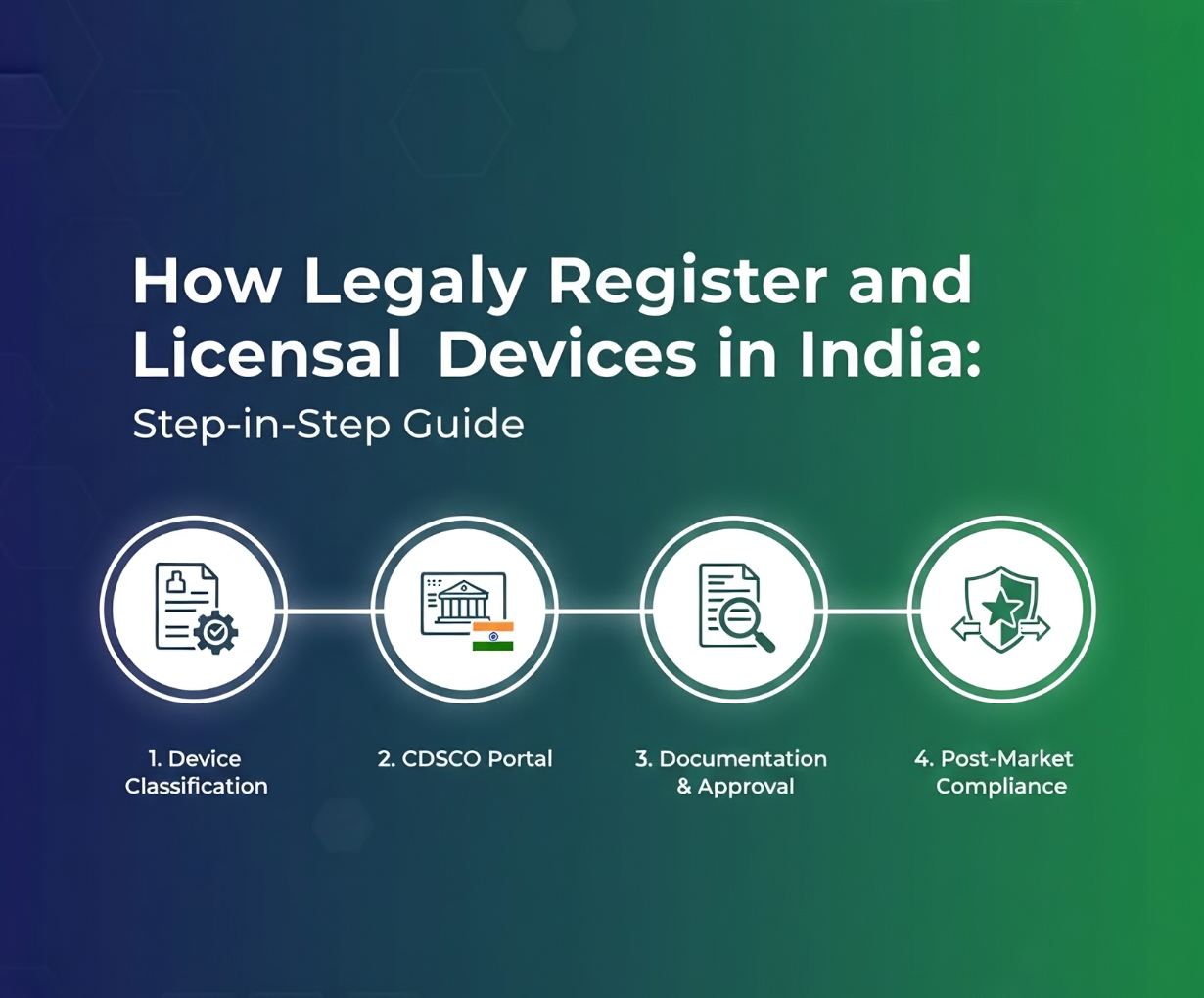
Step-by-Step Licensing and Registration Process
1. Product Classification
-
Determine the device class based on intended use and specifications.
-
Refer to CDSCO’s published device list or consult regulatory experts for classification.
2. Quality Management System (QMS) Implementation
-
Obtain ISO 13485:2016 certification—a mandatory requirement for manufacturers, importers, and distributors.
3. Dossier Preparation
-
Compile comprehensive documentation:
-
Device description and specifications
-
Intended use and labeling
-
Clinical data (where applicable)
-
Risk analysis and management data
-
Manufacturing process and quality controls
-
4. CDSCO Application Submission
-
Submit the application via the SUGAM online portal.
-
Attach all required documents, including QMS certification.
5. Regulatory Review and Approval
-
CDSCO reviews the submission for completeness and compliance.
-
Additional queries or data may be requested.
-
Upon approval, a device registration certificate and manufacturing/import license are issued.
6. Post-Market Surveillance
-
Maintain robust systems for adverse event reporting and device tracking.
-
Respond promptly to CDSCO audits and market complaints.
Key Legal Requirements for Medical Devices
-
Importers and manufacturers must be licensed.
-
Foreign manufacturers require an Indian Authorized Agent for device registration.
-
Annual renewals and regulatory reporting are mandatory.
-
Strict penalties apply for non-compliance, including license suspension or cancellation.
Tips for a Smooth Licensing Experience
-
Start QMS implementation and documentation early.
-
Stay updated with CDSCO notifications and regulatory changes.
-
Partner with experienced regulatory consultants to avoid delays and rejections.
-
Ensure all documents are accurate and aligned with Indian standards.
Conclusion
Successfully navigating India’s legal landscape for medical device licensing and registration is vital for market access, patient safety, and company reputation. By following the right steps and maintaining compliance, manufacturers can thrive in India’s growing healthcare sector.