

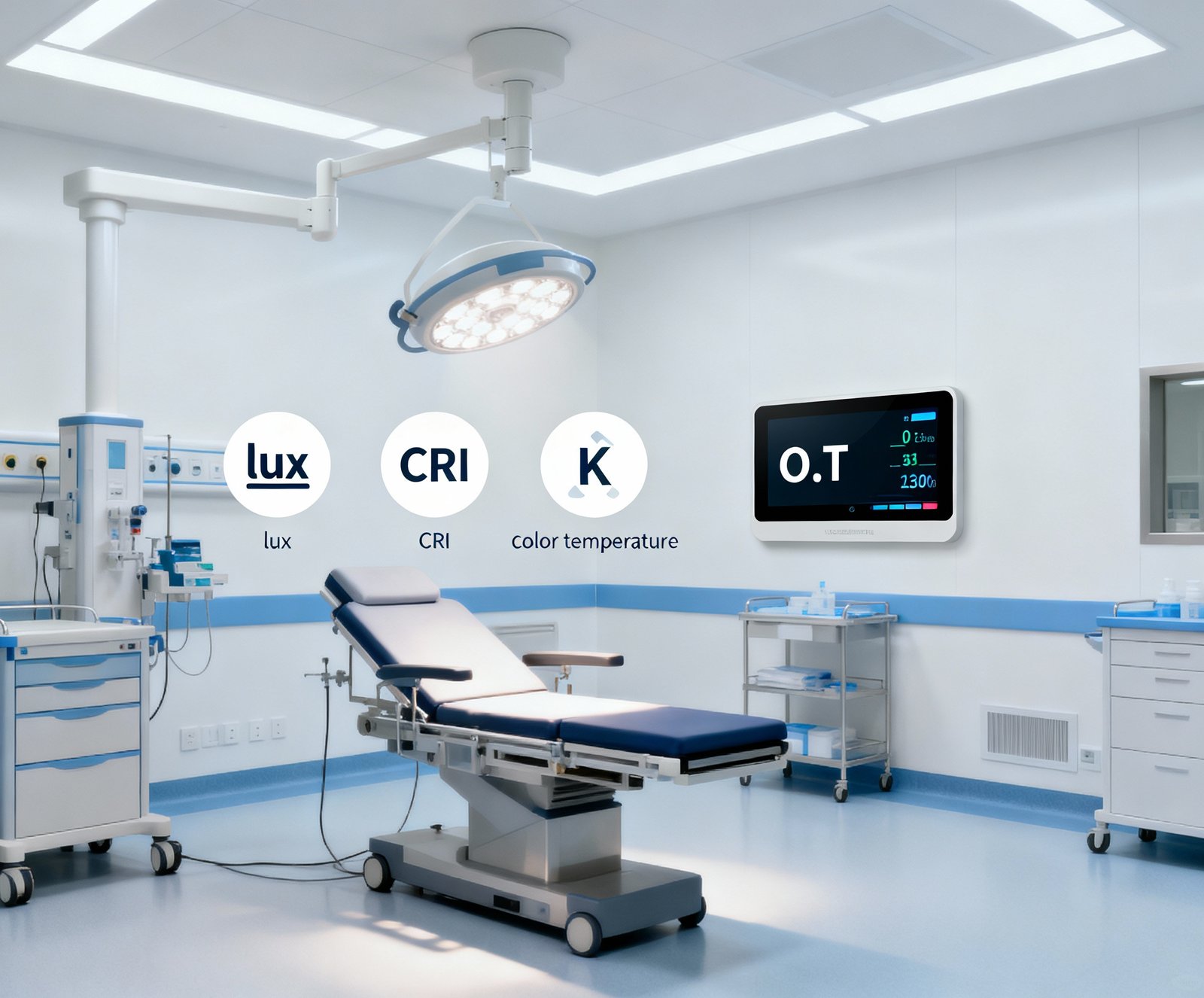
Understanding the Technical Specs: Lux, CRI, and Color Temperature in O.T. Lights
When it comes to surgical procedures, the right operating room lighting can make all the difference. O.T. Lights—also known as Operating Theatre Lights—are designed with advanced technical specifications that directly impact visibility, safety, and accuracy during surgery. In this blog, we break down the three most essential terms: Lux, CRI, and Color Temperature, helping you make informed choices for your hospital or clinic.
What is Lux in O.T. Lights?
Lux is a unit of measurement for light intensity—specifically, how much light falls on a given area. In operating rooms, higher lux levels mean brighter illumination, which is crucial for seeing fine details during surgery.
-
Why Lux Matters: Surgical tasks demand excellent clarity. Most O.T. lights offer lux ratings ranging from 40,000 to 160,000, ensuring the operating field is clearly visible without shadows.
-
Choosing the Right Lux: Consider your procedure types. Complex surgeries may require higher lux; minor procedures may suffice with lower values.
Why is CRI Important?
CRI stands for Color Rendering Index. It measures how accurately a light source displays colors compared to natural sunlight—rated on a scale from 0 to 100.
-
Why CRI Matters: Surgeons depend on color differentiation for diagnosis and treatment. A high CRI (above 90) helps doctors distinguish between tissues, blood vessels, and any abnormalities with confidence.
-
Tip: Always select O.T. lights with high CRI for color-critical applications to prevent diagnostic errors.
What is Color Temperature?
Color Temperature describes the hue of the light emitted, measured in Kelvin (K). Unlike intensity, it deals with the “warmth” or “coolness” of the light.
-
Warm Light (≈3,000K): Yellowish and soothing, but may alter tissue colors.
-
Cool Light (≈5,000–6,500K): Bluish and closest to daylight—ideal for surgical environments.
-
Right Choice: Opt for O.T. lights with adjustable color temperature, allowing teams to switch between warm and cool lighting depending on procedure needs.
How Do These Specs Impact Surgical Outcomes?
-
Optimal Visibility: High lux enables clear observation.
-
True Color Recognition: High CRI supports accurate tissue identification.
-
Customizable Comfort: Adjustable color temperature reduces eye strain and enables procedural flexibility.
Choosing the Best O.T. Light for Your Facility
When upgrading your operating room lights, always review these technical specifications:
-
Lux rating for brightness.
-
CRI score for color accuracy.
-
Color temperature range for procedural versatility.
Consult with experts and invest in brands that disclose detailed specs, ensuring you get the best performance and safety for your team.
Final Thoughts
Lux, CRI, and Color Temperature are critical for the selection and effective use of O.T. lights. Hospitals and clinics should prioritize these technical details for optimal surgical results. Upgrade wisely and experience the brilliance of modern surgical lighting.